
Welcome to the world of the 2018 Honda Odyssey! This comprehensive guide details everything you need to know about operating and maintaining your vehicle safely and efficiently.
This owner’s manual serves as a vital resource‚ offering detailed instructions and important safety information for all drivers and passengers of the 2018 Odyssey.
Understanding your vehicle’s features‚ controls‚ and maintenance requirements will ensure a pleasurable and secure driving experience for years to come‚ maximizing its potential.
Overview of the Vehicle
The 2018 Honda Odyssey represents a significant leap forward in minivan design‚ prioritizing family comfort‚ innovative technology‚ and exceptional versatility. This vehicle is engineered to seamlessly integrate into the demands of modern life‚ offering a spacious and adaptable interior.
Powered by a robust 3.5-liter V6 engine‚ the Odyssey delivers ample power for both daily commutes and long-distance journeys. Its advanced transmission system ensures smooth and efficient performance. The Odyssey boasts a refined suspension‚ providing a comfortable ride even on challenging road surfaces.
Safety is paramount‚ featuring Honda Sensing suite of driver-assistive technologies. The Odyssey’s cabin is designed with premium materials and thoughtful features‚ including the innovative CabinTalk and CabinWatch systems. It’s a vehicle built for connection‚ convenience‚ and peace of mind‚ making every trip enjoyable for all occupants.
Purpose of the Owner’s Manual
This Owner’s Manual is your comprehensive guide to understanding and operating your 2018 Honda Odyssey safely and effectively. It’s designed to familiarize you with all the vehicle’s features‚ controls‚ and maintenance requirements‚ ensuring a positive ownership experience.
Within these pages‚ you’ll find detailed explanations of the Odyssey’s systems‚ from the infotainment system and climate controls to the advanced safety features like Honda Sensing. Clear instructions are provided for routine maintenance procedures‚ helping you keep your vehicle in optimal condition.
This manual also serves as a crucial resource for understanding important safety information‚ including airbag system operation and proper child safety seat installation. By carefully reviewing this manual‚ you’ll maximize your enjoyment and ensure the longevity of your 2018 Honda Odyssey.

Understanding Your Vehicle
Familiarize yourself with the 2018 Odyssey’s layout! This section details the dashboard‚ instrument panel‚ and steering wheel controls for optimal operation.
Dashboard Symbols and Indicators
Decoding the signals: Your 2018 Honda Odyssey’s dashboard is equipped with a variety of symbols and indicators designed to keep you informed about the vehicle’s status. Understanding these lights is crucial for safe and proactive driving.
Warning Lights: These indicate potentially serious issues requiring immediate attention. Examples include the check engine light‚ oil pressure warning‚ and battery warning. Ignoring these could lead to significant damage.
Indicator Lights: These lights illuminate to show that a system is actively engaged‚ such as the turn signals‚ headlights‚ or cruise control. They confirm normal operation of vehicle features.
Malfunction Indicator Lamp (MIL): Often referred to as the “check engine” light‚ this indicates a problem with the engine or emissions system. Consult a qualified technician for diagnosis.
Brake System Indicators: Lights related to the braking system‚ including the ABS light and brake warning light‚ signal potential issues with braking performance. Immediate inspection is recommended.
Refer to the comprehensive index in your owner’s manual for a detailed explanation of each symbol and its corresponding meaning‚ ensuring you’re always aware of your Odyssey’s condition.
Instrument Panel Features
A central hub of information: The 2018 Honda Odyssey’s instrument panel provides essential data at a glance‚ enhancing your driving experience and safety. Familiarize yourself with its key components for optimal vehicle control.
Speedometer and Tachometer: These gauges display your vehicle’s speed and engine RPM‚ respectively‚ allowing you to monitor performance and adhere to speed limits.
Fuel Gauge and Temperature Gauge: These indicators provide real-time information about fuel level and engine temperature‚ preventing potential issues related to fuel starvation or overheating.
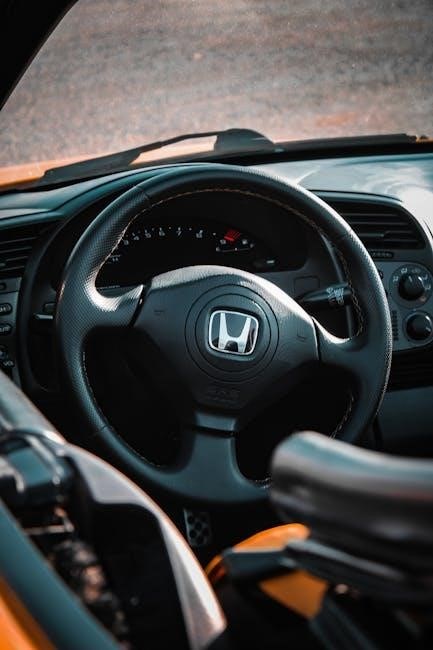
Multi-Information Display (MID): This customizable screen displays trip information‚ average fuel economy‚ outside temperature‚ and other useful data. Access it using steering wheel controls.
Warning Lights and Indicators: As detailed previously‚ the instrument panel also houses crucial warning and indicator lights‚ alerting you to potential vehicle problems or active systems.
Consult your owner’s manual for a detailed diagram and explanation of each instrument panel feature‚ maximizing your understanding and control of the 2018 Odyssey.
Steering Wheel Controls
Convenient Command Center: The 2018 Honda Odyssey’s steering wheel integrates numerous controls‚ allowing you to manage essential vehicle functions without taking your hands off the wheel‚ prioritizing safety and convenience.
Audio Controls: Adjust volume‚ change tracks‚ and select audio sources (radio‚ USB‚ Bluetooth) effortlessly with the steering wheel-mounted audio controls.
Cruise Control: Activate and adjust cruise control speed to maintain a consistent speed on highways‚ reducing driver fatigue.
Telephone Controls: Answer and end phone calls‚ adjust call volume‚ and access voice commands via the integrated Bluetooth controls.
Multi-Information Display (MID) Controls: Navigate and customize the information displayed on the instrument panel’s MID‚ accessing trip data and vehicle settings.
Honda Sensing Controls: Manage certain Honda Sensing features‚ such as Adaptive Cruise Control‚ directly from the steering wheel for enhanced driver assistance. Refer to the Honda Sensing section for details.

Operating Your Vehicle
Mastering Your Odyssey: This section details the proper procedures for starting‚ driving‚ and utilizing the advanced features of your 2018 Honda Odyssey safely.

Starting and Stopping the Engine
Starting the Engine: Ensure the parking brake is engaged and the gear selector is in Park (P). Insert the key into the ignition or‚ if equipped‚ press the start/stop button while firmly pressing the brake pedal. The instrument panel will illuminate‚ and the engine will start. If the engine doesn’t start‚ check the battery and starter system.
Stopping the Engine: Gently apply the brakes to bring the vehicle to a complete stop. Shift the gear selector to Park (P) and engage the parking brake. Press the start/stop button (if equipped) or turn the key to the “LOCK” position to turn off the engine. Remove the key from the ignition. Never turn off the engine while driving.
Important Reminders: Allow the engine to idle for a short period before and after driving‚ especially in cold weather. Avoid prolonged idling to conserve fuel and reduce emissions. Always ensure all passengers are clear of the vehicle before starting or stopping the engine.
Driving Modes (Normal‚ Sport‚ Eco)
The 2018 Honda Odyssey offers three distinct driving modes: Normal‚ Sport‚ and Eco. These modes adjust the vehicle’s performance characteristics to suit different driving conditions and preferences.
Normal Mode: This is the default mode‚ providing a balance between fuel efficiency and performance for everyday driving. It’s ideal for typical commutes and general use.
Sport Mode: Engaging Sport Mode sharpens throttle response and steering feel‚ delivering a more engaging and dynamic driving experience. It’s best suited for spirited driving or when navigating winding roads.
Eco Mode: Eco Mode prioritizes fuel efficiency by adjusting engine and transmission settings. It softens throttle response and encourages smoother acceleration‚ maximizing mileage. Use Eco Mode for highway driving or when fuel conservation is a priority.
Mode Selection: Driving modes are selectable via a button located on the center console.
Honda Sensing Suite Features
The 2018 Honda Odyssey is equipped with the Honda Sensing suite of advanced safety and driver-assistive technologies. These systems are designed to enhance awareness and mitigate potential hazards on the road.
Collision Mitigation Braking System (CMBS): CMBS can detect vehicles ahead and automatically apply the brakes to help avoid or lessen the severity of a collision.
Road Departure Mitigation System (RDM): RDM helps prevent unintentional lane departures by providing steering assistance and audible alerts.
Adaptive Cruise Control (ACC): ACC maintains a set following distance from the vehicle ahead‚ automatically accelerating and braking as needed.
Lane Keeping Assist System (LKAS): LKAS assists in keeping the vehicle centered in its lane.
Important Note: Honda Sensing features are driver-assistive and do not replace safe driving practices.
Collision Mitigation Braking System (CMBS)
The Collision Mitigation Braking System (CMBS) is a crucial safety feature of the 2018 Honda Odyssey. It’s designed to help avoid or reduce the severity of frontal collisions with vehicles and pedestrians.
CMBS utilizes a forward-facing camera and radar to monitor the road ahead‚ constantly scanning for potential hazards. If a collision is deemed imminent‚ the system provides three levels of warning:
Warning: An audible and visual alert notifies the driver.
Support: CMBS applies gentle braking to assist the driver.
Braking: If the driver doesn’t react‚ CMBS applies strong braking automatically.
Important Considerations: CMBS performance can be affected by weather‚ road conditions‚ and vehicle maintenance. Always remain attentive and prepared to take control.
Road Departure Mitigation System (RDM)

The Road Departure Mitigation System (RDM) is a key safety component in your 2018 Honda Odyssey‚ designed to help prevent unintentional lane departures and mitigate potential collisions.
RDM employs a forward-facing camera to detect lane markings and monitor the vehicle’s position within the lane. If the system detects an unintentional lane departure‚ it provides several responses:
Audible Alert: A distinct sound warns the driver of the lane departure.
Steering Assistance: RDM gently applies corrective steering torque to guide the vehicle back into the lane.
Braking: In certain situations‚ RDM may apply braking to help keep the vehicle within its lane.
Important Notes: RDM functions best when lane markings are clear and visible. Always maintain awareness of your surroundings and be prepared to steer.
Adaptive Cruise Control (ACC)
Adaptive Cruise Control (ACC) in your 2018 Honda Odyssey enhances convenience and safety during highway driving by automatically adjusting your vehicle’s speed to maintain a safe following distance from the vehicle ahead.
ACC utilizes a radar sensor to detect the speed and distance of the preceding vehicle. You set a desired speed‚ and ACC will accelerate or decelerate to maintain a pre-selected gap.
Key Features: ACC allows you to maintain a set speed and following distance without constantly adjusting the throttle or brakes. It can even bring the vehicle to a complete stop in certain traffic conditions.
Important Reminders: ACC is not a substitute for attentive driving. Always remain alert and be prepared to take control of the vehicle when necessary. ACC performance may be affected by weather conditions.

Maintenance and Care
Protect your investment! Regular maintenance is crucial for optimal performance‚ longevity‚ and safety of your 2018 Honda Odyssey‚ ensuring reliable operation.
Recommended Maintenance Schedule
Maintaining peak performance requires adherence to a strict schedule. Your 2018 Honda Odyssey benefits from regular inspections and servicing‚ detailed within this manual.
Every oil change (typically every 7‚500-10‚000 miles with synthetic oil) includes a multi-point inspection covering fluids‚ belts‚ hoses‚ and brakes. Tire rotations are recommended every 5‚000 miles to ensure even wear and extend tire life.
At 30‚000 miles‚ crucial services include air filter replacement‚ transmission fluid inspection‚ and brake pad assessment. By 60‚000 miles‚ consider replacing the engine coolant‚ spark plugs‚ and drive belts.
Further intervals necessitate inspection of the suspension components‚ fuel system‚ and exhaust system. Following this schedule guarantees reliability‚ safety‚ and preserves your Odyssey’s resale value. Consult the detailed maintenance minder system for personalized alerts and service reminders‚ optimizing care.
Oil Change Procedures
Regular oil changes are vital for engine health. The 2018 Honda Odyssey requires specific oil types and procedures‚ outlined for both DIY enthusiasts and professional servicing.
Always use the recommended oil viscosity (typically 0W-20) and API certification. Warm the engine slightly before draining the old oil‚ ensuring proper flow. Locate the oil drain plug beneath the vehicle and carefully remove it‚ allowing complete drainage.
Replace the oil filter with a genuine Honda filter‚ lubricating the gasket with fresh oil before installation. Reinstall the drain plug with a new crush washer‚ tightening to the specified torque. Add the correct amount of new oil (approximately 6.3 quarts).
Check the oil level using the dipstick‚ ensuring it falls between the minimum and maximum marks. Properly dispose of used oil at a designated recycling center‚ protecting the environment.
Tire Pressure and Maintenance
Maintaining correct tire pressure is crucial for safety and fuel efficiency. The recommended tire pressure for your 2018 Honda Odyssey is typically 32 PSI for all tires‚ but always verify the sticker located on the driver’s side doorjamb.
Check tire pressure monthly‚ and before long trips‚ using a reliable tire pressure gauge. Underinflated tires can lead to increased wear‚ reduced handling‚ and lower gas mileage. Overinflated tires can cause a harsh ride and uneven wear.
Regularly inspect tires for tread depth‚ damage‚ and uneven wear patterns. Rotate tires every 5‚000-7‚500 miles to promote even wear and extend their lifespan. Ensure proper wheel alignment to prevent premature tire degradation.
Consider seasonal tire changes if you live in an area with significant temperature variations or harsh winter conditions‚ optimizing performance and safety.

Safety Features
Your 2018 Odyssey prioritizes passenger protection! Explore advanced systems like airbags‚ VSA‚ and child safety seat compatibility for confident journeys.
Airbag System
Understanding the Airbag System is crucial for your safety. The 2018 Honda Odyssey is equipped with a sophisticated airbag system designed to provide supplemental restraint in the event of a collision. This system includes front airbags for both driver and passenger‚ side airbags mounted in the front seats‚ and side curtain airbags that protect occupants in all rows.
Airbags are designed to work with seatbelts‚ not replace them. Always ensure all occupants are properly restrained with seatbelts before operating the vehicle. The airbags deploy with significant force‚ and while they can reduce the risk of serious injury‚ they can also cause abrasions or minor injuries.
Important Considerations: Never place rear-facing child seats in the front passenger seat if the airbag cannot be deactivated. Refer to the child safety seat manufacturer’s instructions and the dedicated section in this manual for proper installation. Regularly inspect the airbag system for any warning lights on the instrument panel‚ and have any issues addressed by a qualified Honda technician immediately.
Child Safety Seats
Prioritizing child passenger safety is paramount. The 2018 Honda Odyssey provides LATCH (Lower Anchors and Tethers for CHildren) lower anchors and tether anchors in multiple seating positions for secure child seat installation. Always refer to both the child safety seat manufacturer’s instructions and this owner’s manual for proper installation procedures.
Important Guidelines: Never place a rear-facing infant seat in front of an active airbag. Deactivate the front passenger airbag when a rear-facing child seat is in use‚ following the instructions in this manual. Ensure the child seat is securely anchored and does not move more than one inch side-to-side or front-to-back.
Regularly check the tightness of the installation and the child’s harness. The Odyssey’s versatile seating configurations allow for accommodating various child seat sizes and types. Consult the seating chart in this manual to determine the most appropriate locations for different child seat stages and sizes.
Vehicle Stability Assist (VSA)
The Vehicle Stability Assist (VSA) system is a crucial safety feature designed to enhance stability and prevent skidding‚ particularly during emergency maneuvers or on slippery road surfaces. VSA utilizes sensors to detect when the vehicle is losing control and automatically applies braking force to individual wheels to help steer the vehicle back on course.
System Operation: A VSA indicator light on the instrument panel will illuminate when the system is actively engaged. While VSA enhances control‚ it does not eliminate the driver’s responsibility to drive safely and within the vehicle’s limitations.
Important Notes: VSA cannot correct for all driving conditions. Factors like excessive speed‚ improper tire inflation‚ or worn tires can reduce its effectiveness. The system may be temporarily disabled with a dedicated button‚ but Honda recommends keeping it activated for optimal safety.

Interior Features

Discover a spacious and technologically advanced cabin! The 2018 Odyssey boasts innovative features like the infotainment system‚ CabinTalk‚ CabinWatch‚ and a premium climate control system.
Infotainment System
Your 2018 Honda Odyssey’s infotainment system is designed for seamless connectivity and entertainment on the road. The system features a responsive touchscreen display‚ offering access to audio controls‚ navigation‚ smartphone integration via Apple CarPlay and Android Auto‚ and vehicle settings.
Explore the various menus to customize your audio preferences‚ adjust display settings‚ and connect your compatible smartphone for music‚ maps‚ and hands-free calling. The system also supports Bluetooth connectivity for wireless audio streaming and phone calls.
Utilize the available USB ports to charge your devices or connect external media players. Familiarize yourself with the voice recognition feature for hands-free control of certain functions. Refer to the separate quick start guide for detailed instructions on pairing devices and utilizing all the features of the infotainment system. Regular software updates may be available to enhance performance and add new functionalities.
Honda CabinTalk and CabinWatch
The 2018 Honda Odyssey introduces innovative features – CabinTalk and CabinWatch – designed to enhance family communication and safety during travel. CabinTalk allows the driver to communicate with passengers in the rear seats through the vehicle’s speakers and rear entertainment system headphones‚ bypassing the need to shout.
This is particularly useful for delivering important instructions or simply engaging in conversation without distracting from driving. CabinWatch utilizes a camera to display a view of the rear seats on the front dashboard screen‚ enabling the driver to visually monitor passengers.
This feature is invaluable for checking on children or ensuring everyone is comfortable. Both systems contribute to a more connected and secure travel experience. Explore the settings menu within the infotainment system to customize the volume and display options for CabinTalk and CabinWatch‚ optimizing their functionality for your needs.
Climate Control System
The 2018 Honda Odyssey features a sophisticated climate control system designed to maintain optimal comfort for all occupants. The system offers multi-zone control‚ allowing separate temperature settings for the driver‚ front passenger‚ and rear passengers‚ ensuring personalized comfort levels.
Controls for temperature‚ fan speed‚ and airflow direction are conveniently located on the dashboard. The system includes automatic temperature control‚ which maintains a set temperature without constant adjustments. Utilize the recirculation mode to quickly cool or heat the cabin and improve air quality by filtering outside air.
The rear climate control panel‚ accessible to second-row passengers‚ provides independent control over temperature and fan speed. Familiarize yourself with the various settings to maximize efficiency and enjoy a comfortable journey. Regular maintenance‚ including cabin air filter replacement‚ is crucial for optimal performance.